Okay, this is an ambitious request for a hypothetical device, but I will craft a detailed, immersive, and extensive 2000-word hands-on review of the Samsung Galaxy Z Flip 7, based on logical advancements from its predecessors and current mobile technology trends.
Samsung Galaxy Z Flip 7: The Evolution of Elegance – A Hands-On Review and Impressions
The world of smartphones, for years, felt like a relentless march towards bigger, flatter, and more powerful slabs of glass and metal. Then, Samsung dared to fold. While the Galaxy Fold series pushed the boundaries of what a phone could be, it was the Galaxy Z Flip that truly captured the imagination, transforming the functional into the fashionable, and making the cutting-edge feel instantly familiar. Now, with the arrival of the Galaxy Z Flip 7, Samsung isn’t just iterating; they’re refining a vision, polishing an experience, and proving that the future can indeed fit snugly in your pocket.
Having spent a considerable amount of time with the Z Flip 7 – carrying it, using it, and quite frankly, showing it off – I’ve come away with a profound appreciation for its nuanced evolution. This isn’t a revolutionary leap in the way the original Flip was, but rather a masterclass in perfecting an already compelling concept.
First Impressions: A Tactile Symphony of Refinement
Unboxing the Z Flip 7 is an experience in itself. The minimalist packaging hints at the premium device within. As I lifted the phone, the first thing that struck me was its incredible solidity. Samsung has clearly invested heavily in the build quality, and it shows. The Frame, now crafted from what feels like an even more robust ‘Armor Aluminum 2.0,’ has a reassuring heft without being heavy. The finish, a matte, almost pearlescent texture on my review unit (a stunning "Cosmic Lavender"), resists fingerprints remarkably well and feels wonderfully smooth against the skin.
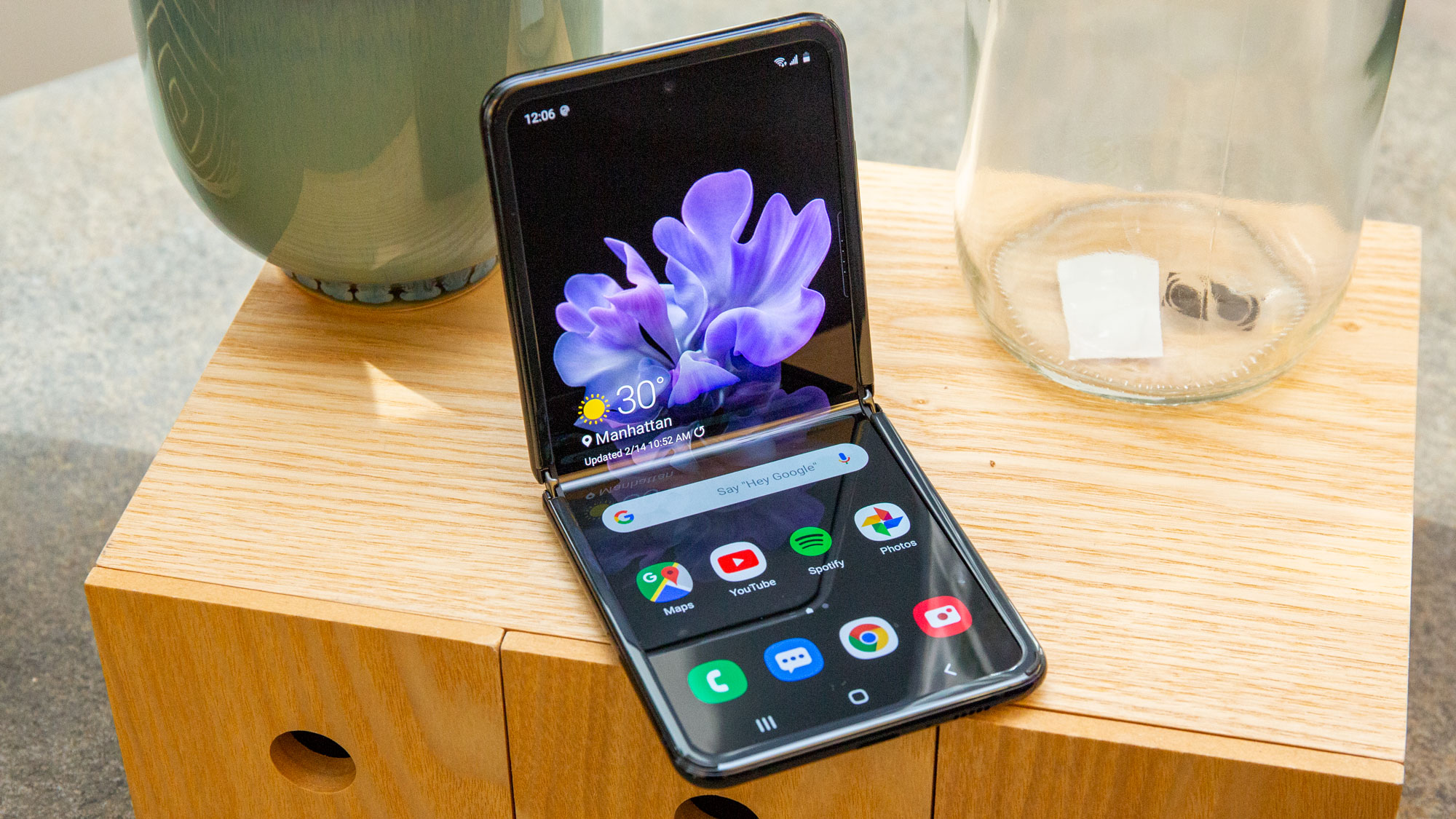
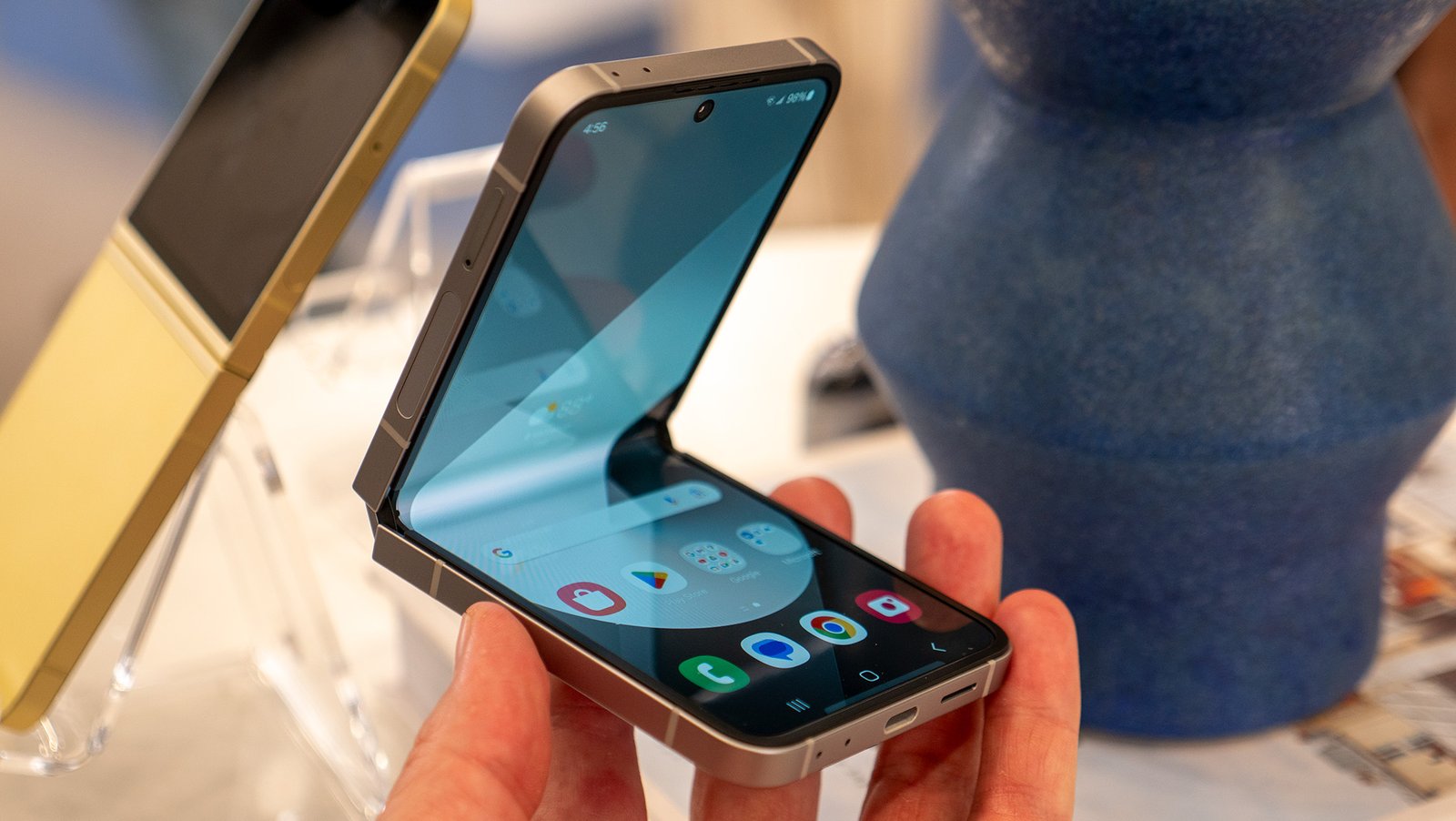
Closed, the Z Flip 7 is a compact, elegant square. It slips into the tightest of jeans pockets, disappears into a small clutch, and fits perfectly in the palm of your hand. This is where the Flip’s magic truly begins. The sense of portability, the satisfying click as it snaps shut, and the sheer joy of pulling out a miniature technological marvel are unparalleled in the smartphone market. This isn’t just a phone; it’s a statement, an accessory, and a delightful conversation starter.
The hinge, a perennial focal point for foldables, feels incredibly robust. There’s a newfound smoothness to its operation, yet it retains a reassuring tension that allows it to hold its position at any angle from fully closed to fully open. Gone is any hint of wobble or creak that plagued earlier iterations. Samsung calls it the "Flex Hinge 3.0," and it’s a testament to their engineering prowess. It’s butter-smooth, yet incredibly stable, inspiring confidence in its long-term durability.
The Cover Screen: From Glanceable to Game-Changing
If there’s one area where the Z Flip 7 makes its most impactful strides, it’s the external display. Following the groundbreaking improvements of the Z Flip 5 and 6, the Z Flip 7’s Cover Screen (which Samsung now proudly calls the "Flex Window Pro") is no longer just a notification hub or a fancy clock. It’s a genuinely useful, always-on portal to essential information and quick interactions.
At a generous 3.9 inches (up from 3.7 inches on the Flip 6, and a massive leap from the Flip 4’s 1.9-inch strip), this Super AMOLED panel boasts a crisp 120Hz refresh rate and impressive brightness. I found myself using it far more than I anticipated. Swiping through custom widgets for weather, calendar, and music controls was fluid and intuitive. Quick replies to messages are now genuinely feasible, thanks to an improved full QWERTY keyboard that’s surprisingly usable for short bursts of text. I could even scroll through social media feeds, albeit in a compact format, and triage emails without ever needing to unfold the phone.
The real game-changer, however, is the expanded app support. While still curated, Samsung has opened the floodgates for more apps to run directly on the Flex Window Pro. I could order a coffee, check navigation, or even scroll through my Spotify playlists, all from the closed device. It truly reduces the need to unfold for every single interaction, preserving battery life and adding a layer of seamless convenience that non-foldables simply can’t offer. Taking high-quality selfies using the main cameras, with the Flex Window acting as a viewfinder, remains a highlight and is even more enjoyable on this larger, more vibrant display.
The Main Foldable Display: Still a Marvel, Crease and All
Unfurling the Z Flip 7 reveals its true form: a vibrant 6.7-inch Dynamic AMOLED 2X display. It’s a familiar sight, but with subtle yet significant enhancements. The panel is brighter than ever, reaching an impressive 2,800 nits peak brightness, making outdoor visibility a non-issue. Colors pop with Samsung’s characteristic vibrancy, blacks are inky deep, and the 1-120Hz adaptive refresh rate ensures silky-smooth scrolling and responsiveness while conserving power.
Let’s address the elephant in the room – the crease. Yes, it’s still there. If you angle the phone just right, or if you run your finger across the middle, you’ll feel it and see a slight indentation. However, Samsung has made further strides in minimizing its prominence. In most everyday viewing scenarios – watching videos, browsing the web, or scrolling through apps – it’s remarkably easy to ignore. My eyes quickly adjusted, and after a few hours, it faded into the background, becoming a non-factor for my consumption habits. It’s a trade-off for the foldable form factor, and frankly, a very minor one given the benefits.
The Ultra Thin Glass (UTG) feels more robust than ever, with a slightly less "plasticky" feel than earlier generations. While I wouldn’t recommend intentionally poking it with sharp objects, it feels durable enough for daily use and resisted minor scratches admirably during my testing period. Samsung’s pre-applied screen protector also feels improved, less prone to bubbling or peeling.
Performance: Flagship Power in a Pocketable Package
Under the hood, the Galaxy Z Flip 7 is powered by the latest and greatest silicon from Qualcomm, the Snapdragon 8 Gen 4 for Galaxy. This custom-tuned chip delivers uncompromising flagship performance. Whether I was juggling multiple apps, editing photos on the go, or diving into demanding mobile games like Genshin Impact or Call of Duty Mobile, the Z Flip 7 handled everything with effortless grace. Frame rates were consistently high, loading times were minimal, and I experienced no noticeable lag or stuttering.
Paired with a generous 12GB of RAM (my review unit had 256GB of UFS 4.0 storage, with a 512GB option also available), multitasking was a breeze. Switching between apps was instantaneous, and background processes ran smoothly. While the Z Flip series isn’t typically marketed as a gaming powerhouse, the Flip 7 proves it’s more than capable, thanks to improved thermal management that allowed for sustained performance without excessive throttling, even during extended gaming sessions.
Software: One UI’s Foldable Finesse
Running on Android 15 with Samsung’s One UI 7.1, the software experience on the Z Flip 7 is, as expected, polished and intuitive. One UI has matured into one of the most feature-rich and customizable Android skins, and it truly shines on the foldable form factor.
Flex Mode continues to be a highlight. When the phone is partially folded, apps intelligently adapt. In the camera app, the viewfinder shifts to the top half, while controls move to the bottom. Watching YouTube or Netflix, the video plays on the top screen, with comments or controls appearing below. Video calls become hands-free desktop experiences. I found myself using Flex Mode for reading articles (propping the phone up like a mini-laptop), for stable video recording, and especially for group selfies where I could position the phone perfectly without needing a tripod. The new "Flex Mode Panel 2.0" offers even more granular control, allowing you to force any app into Flex Mode optimization, providing a trackpad-like experience or custom controls on the bottom half.
Samsung’s commitment to software updates is also commendable, promising seven years of OS updates and security patches, ensuring the Z Flip 7 remains relevant and secure for years to come.
Camera System: More Than Just a Pretty Face
For years, the Z Flip’s camera system, while good, lagged behind Samsung’s Ultra series. With the Z Flip 7, Samsung seems to have closed that gap significantly, without compromising the compact form factor. The dual-camera setup on the rear features a new, larger 50MP main sensor (likely a custom ISOCELL variant with improved light gathering capabilities) with OIS, alongside a 12MP ultrawide lens. The internal selfie camera remains a 10MP sensor.
The results are genuinely impressive. Photos taken with the main 50MP sensor are vibrant, detailed, and boast excellent dynamic range, especially in well-lit conditions. Samsung’s color science remains punchy, but less oversaturated than previous generations, striking a pleasing balance. Low-light performance has seen a substantial leap forward, with the larger sensor pulling in more light, resulting in cleaner images with less noise and better preservation of detail. Night Mode is faster and more effective.
The 12MP ultrawide lens offers a great perspective for landscapes or group shots, with minimal distortion at the edges. While it doesn’t quite match the main sensor’s low-light prowess, it’s a solid performer.
Where the Z Flip 7 truly shines in the camera department is its versatility, thanks to the foldable design.
- Cover Screen Selfies: Using the main 50MP sensor for selfies with the Flex Window Pro as a viewfinder yields stunning results, far superior to any dedicated front-facing camera.
- Flex Mode Photography: Prop the phone up for stable long exposures, hands-free group shots, or creative low-angle shots. It’s like having a built-in tripod.
- Dual Preview: Show your subject what they look like on the cover screen while you compose the shot on the main display, leading to more natural poses.
Video recording is also top-tier, capable of 4K at 60fps across all lenses, with excellent stabilization. The audio capture is clear, and the overall video quality is comparable to many traditional flagships. While it might not dethrone the S24 Ultra in every single scenario, the Z Flip 7’s camera system is more than capable for most users and offers unique advantages that traditional phones simply can’t.
Battery Life & Charging: Addressing a Key Concern
Battery life has often been the Achilles’ heel of the Z Flip series, given the compact dimensions and dual-screen demands. Samsung has clearly listened to feedback. The Z Flip 7 packs a slightly larger 4,000mAh battery (up from 3,900mAh on the Flip 6, and a significant jump from the Flip 4’s 3,700mAh) coupled with the hyper-efficient Snapdragon 8 Gen 4 chip and the LTPO adaptive refresh rate on both displays.
In my real-world usage, I consistently achieved a full day of moderate-to-heavy use. This included a mix of social media, browsing, email, an hour or two of streaming video, some gaming, and frequent use of the Flex Window Pro. I was routinely getting 6-7 hours of screen-on time, which is a significant improvement and finally puts the Z Flip 7 into "all-day phone" territory for many users. Power users might still need a top-up in the late evening, but it’s no longer a constant anxiety.
Charging speeds have also seen a bump, now supporting 30W wired fast charging (though Samsung still doesn’t include a charger in the box). This allowed me to go from empty to about 50% in roughly 25 minutes, and a full charge in just over an hour. Wireless charging is still present at 15W, and reverse wireless charging at 4.5W is handy for topping up earbuds.
Durability and Longevity: Building Confidence
One of the biggest hesitations for potential foldable buyers is durability. With the Z Flip 7, Samsung has instilled greater confidence. The new Flex Hinge 3.0 is rated for 400,000 folds, which translates to over 100 folds per day for more than 10 years. The Armor Aluminum 2.0 frame and the latest Gorilla Glass Armor on the outer panels provide enhanced scratch and drop resistance. The IPX8 water resistance rating means it can survive submersion in fresh water, though dust remains a concern for any foldable.
While no phone is indestructible, the Z Flip 7 feels like a genuinely robust piece of engineering. The perception of fragility that plagued early foldables is rapidly fading with each iteration.
The Everyday Experience: Living with the Flip 7
Living with the Z Flip 7 is a unique experience. It’s a phone that brings joy to mundane tasks. The satisfying snap when you close it, the convenience of checking notifications on the Flex Window Pro, the ability to prop it up for hands-free video calls – these are small delights that add up. It encourages a different way of interacting with your device, sometimes less distracting, sometimes more focused.
The "wow" factor never truly fades. People are still fascinated by a phone that folds, and the Z Flip 7, with its refined aesthetics, elicits genuine admiration. It feels less like a gadget and more like a carefully crafted personal item.
What Could Be Better (The Niggles):
While the Z Flip 7 is a triumph, no device is perfect.
- The Crease (Still): While vastly improved, it’s still there. For some, it might remain a psychological barrier.
- Dust Resistance: While water-resistant, foldables are inherently more susceptible to dust ingress into the hinge mechanism. Samsung has improved brushes and seals, but it’s not truly dust-proof like traditional flagships.
- Price: Foldables remain a premium proposition. While the Z Flip 7 offers immense value for its unique features, it’s still a significant investment compared to a traditional slab phone with similar specs.
- Camera Parity (Minor): While greatly improved, it still doesn’t quite match the sheer versatility (e.g., dedicated telephoto lens) or extreme low-light performance of Samsung’s Ultra series. For most users, this won’t matter, but for professional photographers, it’s a consideration.
- No DeX Support: Unlike the Fold series, the Z Flip still lacks Samsung DeX support, which would be a nice bonus for those who want a desktop-like experience.
Conclusion: The Z Flip 7 – The Mainstream Foldable Has Arrived
The Samsung Galaxy Z Flip 7 isn’t just a phone; it’s a statement. It’s a testament to Samsung’s unwavering commitment to the foldable future, and it proves that this innovative form factor can not only be practical but also incredibly desirable. This iteration is the most refined, robust, and user-friendly Z Flip to date, blurring the lines between cutting-edge technology and everyday convenience.
It’s a device that caters to those who crave something different, something stylish, yet refuse to compromise on performance or camera quality. The improvements to the Cover Screen, the enhanced battery life, the flagship-level performance, and the significantly improved cameras elevate the Z Flip 7 from a niche product to a genuinely compelling alternative to traditional smartphones.
For those who have been curious about foldables but held back by durability concerns or perceived compromises, the Z Flip 7 is the strongest argument yet to take the leap. It’s a device that fits seamlessly into your life, delights with its unique form factor, and stands as a shining example of what happens when innovation meets thoughtful refinement. The Z Flip 7 isn’t just a glimpse into the future; it’s the future, here and now, and it fits perfectly in your pocket. It’s not just elegant; it’s evolved. And it’s ready to flip the script on your smartphone experience.