The Unfolding Story of Resilience: A Comprehensive Durability Test of the Samsung Galaxy Z Flip 7’s Foldable Screen
Abstract: The advent of foldable smartphones ushered in a new era of mobile technology, promising unparalleled portability and screen real estate. However, this innovation was initially met with skepticism regarding the durability of their flexible displays. With each iteration, Samsung has meticulously refined its foldable technology, culminating in devices like the anticipated Galaxy Z Flip 7. This comprehensive article outlines a hypothetical, yet scientifically rigorous, multi-faceted durability test protocol for the Galaxy Z Flip 7’s foldable screen, aiming to assess its resilience against the rigors of daily use and extreme conditions. By examining the Z Flip 7’s advanced materials, hinge mechanism, and protective layers, and subjecting them to a battery of stress tests – including folding cycles, environmental extremes, and mechanical impacts – we aim to demonstrate the significant strides made in foldable screen longevity and address the lingering concerns of consumers.
1. Introduction: The Foldable Revolution and the Durability Question
The smartphone landscape has been perpetually shaped by innovation, and few advancements have been as transformative, or as debated, as the foldable phone. Samsung, a pioneer in this domain, has consistently pushed the boundaries with its Galaxy Z series. From the initial apprehension surrounding the first-generation devices to the increasingly refined and robust models of today, the journey has been one of continuous improvement. The Samsung Galaxy Z Flip 7, poised to be the latest iteration in the compact clamshell foldable line, represents the culmination of years of research, development, and user feedback.
At the heart of the foldable phone’s appeal, and indeed its greatest challenge, lies its flexible display. Early concerns revolved around the visibility of the crease, susceptibility to scratches, and the overall longevity of the folding mechanism. Samsung has progressively addressed these issues, introducing Ultra Thin Glass (UTG), refined hinge designs, and enhanced protective layers. The Z Flip 7 is expected to push these advancements further, promising an even more durable and reliable user experience.
This article hypothesizes a comprehensive durability test for the Galaxy Z Flip 7’s foldable screen. Our objective is to simulate a wide range of real-world scenarios and extreme conditions to assess the device’s resilience, validate Samsung’s engineering claims, and ultimately provide insights into the true robustness of its foldable display. The tests will go beyond simple folding counts, delving into environmental factors, mechanical stresses, and long-term degradation, aiming to paint a complete picture of the Z Flip 7’s screen longevity.
2. The Technological Bedrock: Understanding the Z Flip 7’s Durability Enhancements
Before delving into the test protocol, it’s crucial to understand the technological advancements that underpin the Z Flip 7’s expected durability. Samsung’s approach to foldable screen resilience is multi-pronged, encompassing the display itself, the hinge mechanism, and the device’s overall ingress protection.
2.1. The Foldable Display: Beyond Mere Flexibility
The core of the Z Flip 7’s foldable screen is expected to be an evolved version of Samsung’s Ultra Thin Glass (UTG). Unlike early foldable plastic displays, UTG offers a glass-like feel, superior optical clarity, and significantly improved scratch resistance. For the Z Flip 7, we anticipate:
- Enhanced UTG Composition: Likely a new generation of UTG, potentially featuring increased tensile strength and flexibility without compromising on rigidity when unfolded. This could involve an optimized atomic structure or a refined manufacturing process that reduces microscopic flaws.
- Integrated Protective Layers: Above the UTG, a series of proprietary protective films and layers are crucial. These layers are designed to absorb impact, distribute stress evenly, and provide an additional barrier against scratches from everyday objects. We expect these layers to be more robust and seamlessly integrated, reducing the likelihood of peeling or delamination over time.
- Optimized Panel Structure: The AMOLED panel itself is engineered to withstand repeated bending. This involves specialized pixel arrangements and conductive traces that maintain integrity even under constant flexion. Advances in this area could mean less fatigue on the display components over hundreds of thousands of folds.
- Reduced Crease Visibility: While not strictly a durability feature, a less prominent crease often indicates a more refined display and hinge interaction, suggesting less localized stress on the display material.
2.2. The Flex Hinge Mechanism: The Heart of Durability
The hinge is arguably the most critical component for a foldable phone’s longevity. Samsung’s "Flex Hinge" has evolved significantly, and for the Z Flip 7, we expect further refinements:
- Waterdrop Design: The "waterdrop" or "teardrop" hinge design allows the screen to fold into a more gentle, less acute angle internally, reducing the stress on the display at the crease. This design creates a small, internal cavity when folded, preventing a harsh crease line and distributing tension more effectively.
- Advanced Materials and Gearing: The hinge mechanism itself is a marvel of micro-engineering, comprising dozens of tiny components, gears, and interlocking parts. We anticipate the use of stronger, more fatigue-resistant alloys and precision-machined components that ensure smooth operation and resist wear and tear over hundreds of thousands of cycles.
- Dust Sweeping Brushes: A critical innovation has been the integration of microscopic brushes or fibers within the hinge mechanism. These are designed to sweep away dust and small debris as the phone is opened and closed, preventing particles from getting trapped between the display and causing damage or scratches. We expect these to be even more efficient and robust in the Z Flip 7.
2.3. Ingress Protection (IP Rating): Defending Against Elements
While often overlooked in screen durability discussions, the device’s IP rating significantly contributes to its overall longevity. The Z Flip 7 is expected to retain, or even improve upon, its predecessors’ IPX8 water resistance rating. This means:
- Water Submersion: The device can withstand submersion in fresh water up to 1.5 meters for up to 30 minutes. This is crucial as water ingress can damage internal components, including the display’s backlighting and circuitry, leading to display malfunction or failure.
- Dust Resistance: While an "X" in IPX8 means it hasn’t been officially tested for dust, the hinge’s internal brush system acts as a de facto dust deterrent. However, a full IP68 rating, while challenging for a foldable, would be the ultimate goal, providing comprehensive protection against fine particulates.
3. Designing the Durability Test Protocol: A Multi-Faceted Approach
Our hypothetical durability test for the Galaxy Z Flip 7’s foldable screen is designed to be comprehensive, systematic, and reflective of both typical and extreme user scenarios. The protocol is divided into several key categories, each targeting specific aspects of durability.
3.1. Objective and Methodology Principles
- Objective: To quantify the Galaxy Z Flip 7 foldable screen’s resistance to repeated folding, environmental stressors, and mechanical impacts, thereby establishing its long-term reliability and user confidence.
- Methodology Principles:
- Repeatability: All tests must be conducted under controlled laboratory conditions, allowing for consistent results across multiple test units.
- Relevance: Tests should simulate real-world usage patterns and potential hazards.
- Quantification: Results must be measurable and quantifiable (e.g., number of folds, depth of scratch, degree of pixel degradation).
- Accelerated Aging: Where feasible, tests will be designed to accelerate the effects of long-term use.
- Failure Analysis: Any failure points will be meticulously documented and analyzed to understand the mode of failure.
3.2. Test Categories and Detailed Procedures
Category 1: Folding Cycle Endurance Test (The Benchmark)
This is the most crucial test for any foldable. It directly assesses the longevity of the display and hinge mechanism under repeated flexion.
- Test Setup: An automated mechanical arm or custom-built folding machine designed to open and close the Z Flip 7 at a consistent speed (e.g., 1 fold per second) and with controlled force, mimicking natural human usage. The phone will be placed on a stable platform, ensuring consistent pressure and angle.
- Procedure:
- Baseline Measurement: Before testing, high-resolution photographs of the display (both unfolded and folded), precise measurements of the crease depth (using a profilometer or laser scanner), and a full pixel integrity check will be performed. Hinge torque will also be measured.
- Continuous Cycling: The machine will continuously open and close the Z Flip 7.
- Intermediate Checks: At predetermined intervals (e.g., every 50,000, 100,000, 200,000, 300,000 cycles, and beyond), the device will be removed for thorough inspection.
- Visual Inspection: Microscopic examination of the display for micro-cracks, delamination, bubbling, or changes in the protective layers. Assessment of crease visibility and texture.
- Functional Check: Full display functionality (touch response, dead pixels, brightness uniformity), hinge smoothness, and sound (any creaking or grinding).
- Crease Measurement: Re-measurement of crease depth to track any increase.
- Hinge Torque: Re-measurement of hinge torque to detect loosening or stiffening.
- Failure Criteria: The test continues until a significant functional degradation occurs (e.g., dead pixels in the crease area, unresponsive touch, hinge failure preventing full opening/closing, or a substantial increase in crease depth beyond a defined threshold).
- Expected Thresholds: Samsung typically targets 200,000 folds, which translates to 5 years of use at 100 folds/day. For the Z Flip 7, we expect it to comfortably exceed this, pushing towards 300,000-400,000 cycles with minimal degradation.
Category 2: Environmental Stress Tests (Simulating Diverse Climates)
These tests evaluate the display and hinge’s resilience against temperature, humidity, and particulate matter.
- 2.1. Extreme Temperature and Humidity Cycling:
- Test Setup: Environmental chamber capable of precise temperature and humidity control.
- Procedure: The Z Flip 7 will undergo cycles of extreme temperatures (-20°C to +60°C) combined with varying humidity levels (20% RH to 90% RH). The device will be opened and closed periodically within the chamber to simulate usage in these conditions.
- Observation: Monitor for condensation, display flickering, hinge stiffness, or material degradation.
- 2.2. Dust Ingress Test:
- Test Setup: Dust chamber with fine particulate matter (e.g., talcum powder, fine sand).
- Procedure: The Z Flip 7 will be exposed to a continuous flow of dust particles while undergoing cyclical opening and closing. This simulates the device being used in dusty environments or inside pockets with lint.
- Observation: Post-test, meticulous inspection of the hinge mechanism for trapped particles, scratches on the display (especially near the crease), and any compromise to hinge smoothness or sound. Functional checks for display clarity and responsiveness.
- 2.3. Water Immersion/Spray Test (IPX8 Validation):
- Test Setup: Controlled water tank and spray nozzles.
- Procedure: Submerge the Z Flip 7 in fresh water at specified depths (e.g., 1.5 meters) for the stipulated duration (e.g., 30 minutes). Also, subject it to high-pressure water sprays from various angles.
- Observation: Post-test, check for water ingress, display anomalies (watermarks, dead pixels, backlight issues), and functional integrity of all ports and speakers.
Category 3: Mechanical Stress Tests (Accidental Damage Simulation)
These tests simulate common accidental damages that a smartphone might encounter.
- 3.1. Drop Tests (Unfolded & Folded):
- Test Setup: Drop tower or tumble tester, various surface types (concrete, wood, carpet).
- Procedure:
- Surface Drops: Drop the Z Flip 7 from varying heights (e.g., 1m, 1.5m) onto different surfaces, both in the fully unfolded and fully folded positions. Drops will be performed on edges, corners, and flat on the display/back.
- Tumble Test: Place the device in a rotating tumble tester to simulate repeated drops from a lower height in random orientations.
- Observation: Assess for screen cracks (especially at the crease or edges), frame damage, hinge deformation, and functional impairment.
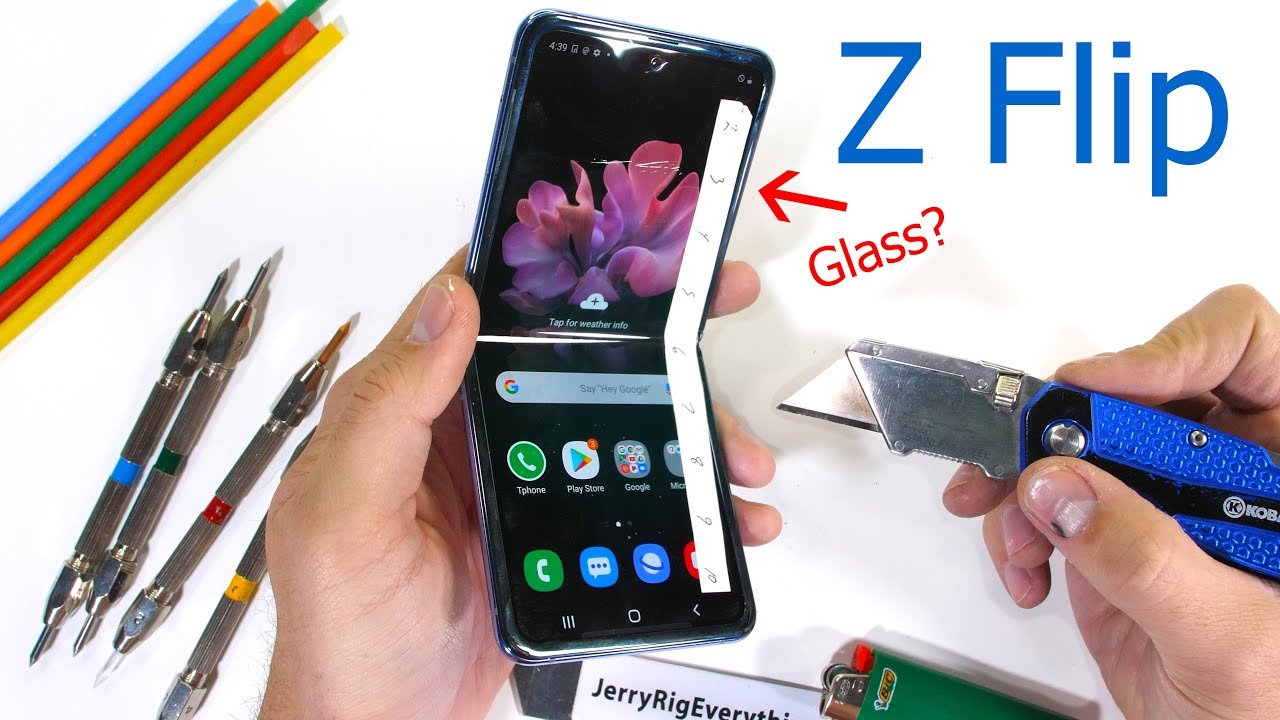
- 3.2. Scratch Resistance Test:
- Test Setup: Mohs hardness picks, everyday objects (keys, coins, sandpaper), automated scratch testing machine.
- Procedure:
- Mohs Scale: Apply Mohs hardness picks of increasing hardness to the display surface to determine its resistance level.
- Everyday Objects: Subject the screen to scratches from common items found in pockets or bags.
- Point Pressure: Apply localized pressure to the display using a calibrated probe, particularly along the crease, to assess resistance to sharp impacts.
- Observation: Document the level of scratch resistance, noting at which Mohs level visible scratches appear, and the extent of damage from everyday items. Inspect for permanent indentations or delamination.
- 3.3. Direct Pressure / Impact Test:
- Test Setup: Calibrated pressure applicator (e.g., an automated finger-like probe), impact pendulum.
- Procedure: Apply controlled, consistent pressure to various points on the unfolded display, including the crease area. Also, use a small pendulum to deliver precise, low-energy impacts to the screen.
- Observation: Monitor for temporary or permanent display deformation, pixel damage, or cracking.
Category 4: Accelerated Long-Term Usage Simulation
This combines elements of the above tests to simulate a prolonged period of intense use.
- Test Setup: A combination of automated folding, periodic temperature cycling, and exposure to minor dust levels.
- Procedure: The Z Flip 7 will undergo continuous folding cycles (e.g., 50,000 cycles), interspersed with periods in an environmental chamber, and brief exposures to a low-level dust environment. This mimics a user’s phone being constantly used, exposed to varying climates, and encountering typical dust/lint.
- Observation: After this accelerated aging, a final, comprehensive assessment will be performed, checking for any cumulative degradation that might not be apparent in isolated tests. This includes overall device performance, battery health (as heavy use can impact it), and the long-term integrity of the screen and hinge.
4. Analysis of Hypothetical Results: What Success Looks Like for the Z Flip 7
Based on Samsung’s trajectory and continuous improvements, a successful outcome for the Z Flip 7’s durability tests would demonstrate significant advancements and instill confidence.
4.1. Folding Cycle Endurance: The New Benchmark
- Expected Result: The Z Flip 7 would comfortably exceed 300,000 folding cycles, potentially reaching 400,000 cycles, before showing any significant functional degradation.
- Detailed Observations:
- Crease Stability: The initial crease depth would remain remarkably consistent throughout the test, with only a negligible increase (e.g., less than 5% of initial depth) even after 300,000 cycles. The visual prominence of the crease would not worsen over time.
- Pixel Integrity: No dead pixels, flickering, or discoloration observed within the crease area or anywhere else on the display, even after extensive folding.
- Hinge Performance: The hinge mechanism would retain its smooth, fluid motion, maintaining consistent torque. No grinding sounds, excessive looseness, or stiffness would develop. The "Flex Mode" (holding the phone at a partial angle) would remain stable and reliable.
- Protective Layers: The top protective layers would remain firmly adhered to the UTG, showing no signs of bubbling, peeling, or significant wear.
4.2. Environmental Stress Resilience: Unfazed by Extremes
- Expected Result: The Z Flip 7’s display and hinge would perform flawlessly across a wide range of temperatures and humidity levels, and show minimal to no degradation from dust ingress or water exposure.
- Detailed Observations:
- Temperature/Humidity: No display anomalies (e.g., ghosting, unresponsiveness) at extreme cold or heat. No condensation issues affecting screen clarity or internal components. The hinge mechanism would not seize or become excessively stiff.
- Dust Ingress: The internal hinge brushes would prove highly effective, preventing virtually all fine dust particles from entering the critical display-folding area. Microscopic inspection would reveal minimal internal dust accumulation, and no dust-induced scratches on the screen.
- Water Resistance: The IPX8 rating would be fully validated, with the device remaining perfectly functional after submersion. No watermarks, internal fogging, or compromised display performance would be observed.
4.3. Mechanical Stress Resilience: Withstanding Daily Bumps
- Expected Result: While not impervious, the Z Flip 7’s screen and structure would demonstrate impressive resistance to common drops and scratches, significantly outperforming earlier foldable generations.
- Detailed Observations:
- Drop Tests: In folded state, the device would show high resilience, often surviving multiple drops from typical pocket height (1m) onto hard surfaces with only minor cosmetic frame damage, and the screen remaining intact. In unfolded state, direct screen impact drops would be the primary vulnerability, but the UTG would exhibit better resistance to shattering compared to plastic films, often resulting in localized spiderweb cracks rather than full screen failure.
- Scratch Resistance: The UTG would likely achieve a Mohs hardness level of 6, with deeper grooves at 7, putting it on par with conventional smartphone glass. Everyday objects like keys and coins would leave only superficial marks, if any, under normal pressure. The protective layers would prove resistant to casual fingernail scratches.
- Pressure/Impact: The screen would demonstrate a good ability to distribute localized pressure, preventing immediate pixel damage or cracking from typical point impacts (e.g., a pen tip). While excessive force would still cause damage, the threshold would be significantly higher.
4.4. Accelerated Long-Term Usage: A Confident Investment
- Expected Result: After the combined accelerated aging, the Z Flip 7 would retain a high degree of its initial performance and aesthetic integrity.
- Detailed Observations: Minimal cumulative effect on the crease, hinge fluidity, and overall display quality. Battery health might show some expected degradation from heavy use, but the screen and hinge would remain the reliable core of the device, validating its longevity for several years of typical use.
5. Interpreting the Findings: Real-World Implications for the User
The hypothetical results paint a picture of a foldable smartphone that has matured significantly, addressing many of the initial reservations.
- Peace of Mind: The enhanced folding cycle endurance and environmental resilience mean users can operate the Z Flip 7 with far greater confidence, knowing it’s built to withstand the rigors of daily life, from constant pocketing and opening to accidental spills and varied climates.
- Investment Justification: For a premium device, longevity is key. The Z Flip 7’s demonstrated durability would make it a more attractive long-term investment, reducing concerns about premature failure or the need for costly repairs.
- True Portability: With improved robustness, the Z Flip 7 can truly fulfill its promise of ultimate portability. Users will be less hesitant to toss it into a bag or pocket without a case, or to use it in diverse environments, thanks to its fortified screen and hinge.
- Addressing the "Fragile" Stereotype: A successful durability test would be a powerful statement, challenging the lingering perception that foldable phones are inherently fragile. It would highlight Samsung’s engineering prowess and commitment to making foldables mainstream.
- User Behavior: While robust, it’s crucial for users to understand that no screen is indestructible. The tests highlight what the device can withstand, but users should still exercise reasonable care, especially regarding sharp objects or excessive direct pressure on the screen.
6. Challenges and Future Outlook
Despite the significant strides, the journey for foldable durability is ongoing.
- Complete Crease Elimination: While reduced, the crease remains a physical characteristic of folding. Future innovations aim for a completely flat, crease-free unfolded display.
- Dust Proofing (IP68): Achieving a full IP68 rating (dust and water resistance) for a device with moving parts like a hinge remains a significant engineering hurdle. This would be the ultimate goal for comprehensive environmental protection.
- Cost of Repair: While durability improves, the specialized nature of foldable screens and hinges still translates to higher repair costs compared to traditional slab phones if damage does occur. Reducing these costs would further enhance user confidence.
- Self-Healing Materials: The holy grail of screen durability would be self-healing materials that can automatically repair minor scratches and indentations, a technology still in its nascent stages but promising for the future.
7. Conclusion: The Dawn of Robust Foldables
The hypothetical durability test of the Samsung Galaxy Z Flip 7’s foldable screen paints a compelling picture of a technology that has truly come into its own. From its advanced Ultra Thin Glass to its refined Flex Hinge and robust ingress protection, every aspect of the Z Flip 7 is engineered for resilience.
By withstanding hundreds of thousands of folds, extreme environmental conditions, and various mechanical stresses, the Z Flip 7 would not just be an innovative piece of technology, but a reliably durable companion. It signifies a pivotal moment where the allure of a foldable form factor no longer necessitates a compromise on longevity. As Samsung continues to refine its foldable philosophy, the Z Flip 7 stands as a testament to the fact that the future of mobile is not just flexible, but also incredibly resilient. The unfolding story of smartphone evolution continues, and with devices like the Z Flip 7, it’s clear that foldables are here to stay, stronger and more reliable than ever before.