
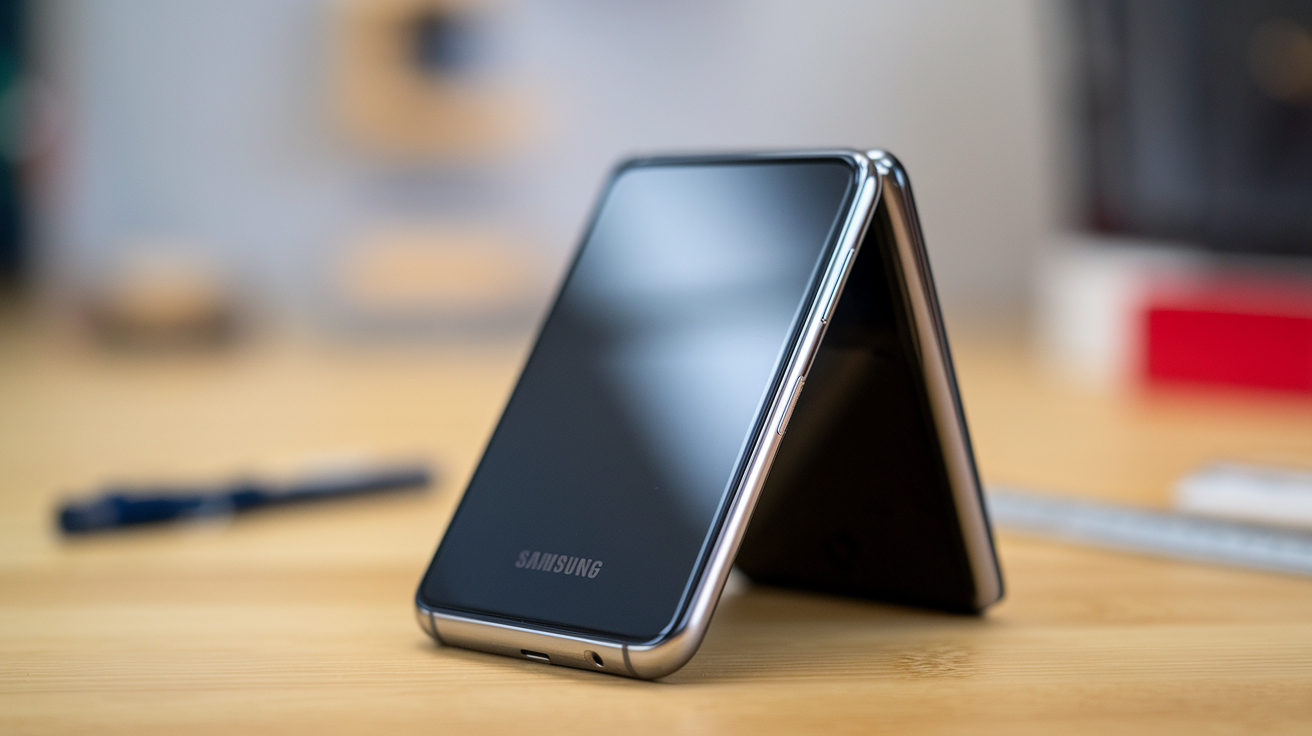
Okay, this is an ambitious word count for a speculative article, but I’ll do my best to provide a comprehensive and detailed exploration of potential design and hinge improvements for the Samsung Galaxy Z Flip 7.
The Apex of Articulation: Anticipating the Galaxy Z Flip 7’s Design and Hinge Revolution
The foldable smartphone market, once a niche filled with futuristic concepts and hefty price tags, has steadily matured into a vibrant segment, largely spearheaded by Samsung’s pioneering efforts. Among its foldable lineup, the Galaxy Z Flip series stands out as a fashion-forward, compact powerhouse, appealing to users who crave both cutting-edge technology and a stylish, portable form factor. With each iteration, Samsung has meticulously refined the Z Flip’s design and, crucially, its hinge mechanism, transforming it from a fragile novelty into a durable, everyday companion. As we look towards the horizon, the anticipated Galaxy Z Flip 7 represents not just another incremental update, but a potential paradigm shift in what a clamshell foldable can achieve, particularly in its core tenets: design elegance and hinge engineering.
The journey of the Z Flip series has been one of continuous evolution. The original Z Flip introduced the world to the compact clamshell design, offering a refreshing alternative to ever-larger slab phones. The Z Flip 3 brought newfound mainstream appeal with improved durability and water resistance. The Z Flip 4 refined the formula, enhancing battery life and processing power. But it was arguably the Galaxy Z Flip 5 that marked the most significant leap, finally addressing the persistent "gap" when folded and dramatically expanding the utility of the external Flex Window. These advancements were not merely aesthetic; they were deeply intertwined with the underlying hinge technology, moving from a U-shaped mechanism to the more sophisticated "waterdrop" or "Flex Hinge" design.
For the Galaxy Z Flip 7, the focus will undoubtedly remain on perfecting these foundational elements. The goal is no longer just to make a foldable phone, but to make a foldable phone that is indistinguishable in durability and user experience from a traditional flagship, while offering the unique benefits of its form factor. This pursuit of perfection will manifest in a design that is even more seamless, robust, and ergonomically superior, underpinned by a hinge that is a marvel of micro-engineering.
The Hinge: The Unseen Heartbeat of the Foldable
The hinge is, without exaggeration, the single most critical component of any foldable phone. It dictates the device’s durability, its folded profile, the appearance of the display crease, and the overall user experience of opening and closing the phone. For the Z Flip 7, Samsung is expected to push the boundaries of hinge technology further than ever before, moving beyond incremental improvements to potentially revolutionary advancements.
1. The Pursuit of the Invisible Crease:
While the "waterdrop" hinge introduced with the Z Flip 5 significantly reduced the display crease compared to earlier models, it hasn’t eliminated it entirely. A subtle indentation remains, especially visible under certain lighting conditions. For the Z Flip 7, Samsung’s engineers will likely target an "invisible" or near-imperceptible crease. This isn’t solely a hinge challenge but a synergy between hinge design and display technology.
- Advanced Waterdrop Mechanism: The current waterdrop hinge allows the display to fold into a teardrop shape internally, minimizing the stress point. The Z Flip 7 could feature an even more refined version of this, perhaps with a larger, more gradual internal radius, distributing the stress over a wider area. This would require an even more flexible display panel and ultra-thin glass (UTG).
- Next-Generation UTG: Samsung Display is continuously innovating its UTG technology. The Z Flip 7 could incorporate a UTG that is not only thinner and more flexible but also possesses enhanced elasticity and resilience. This might involve new molecular structures or composite layering, allowing the glass to conform more perfectly to the hinge’s internal curvature without developing a visible crease.
- Material Science in the Display Stack: Beyond UTG, the layers beneath the display (polarizer, touch sensor, OLED panel) also contribute to the crease. Samsung might introduce new, more flexible and "self-healing" polymer layers or advanced cushioning materials within the display stack that help the screen rebound to a perfectly flat surface when unfolded, effectively "erasing" the memory of the fold.
2. Unparalleled Durability and Longevity:
Foldable hinges are subjected to immense mechanical stress throughout their lifespan. Samsung has made impressive strides in durability, with the Z Flip 5 rated for 200,000 folds. The Z Flip 7 aims to significantly surpass this, potentially pushing towards 400,000 folds or more, equating to over five years of heavy use (100 folds per day).
- Aerospace-Grade Materials: The hinge mechanism itself is likely to employ even more robust and lighter materials. While Armor Aluminum has been a staple, the Z Flip 7 might see the introduction of aerospace-grade titanium alloys or advanced carbon fiber composites within the hinge structure. These materials offer superior strength-to-weight ratios, ensuring durability without adding bulk.
- Enhanced Gear Mechanisms: The internal gears and interlocking parts within the hinge are crucial for smooth operation and long-term reliability. The Z Flip 7 could feature micro-precision gears with tighter tolerances, possibly incorporating new self-lubricating materials or advanced surface coatings (like diamond-like carbon, DLC) to reduce friction and wear over hundreds of thousands of cycles.
- Dust and Debris Resistance (IP68 Hinge?): While the Z Flip series boasts IPX8 water resistance, dust ingress remains a concern for any mechanical part. Samsung introduced a "sweeper" mechanism with tiny fibers to brush away dust particles from the hinge gap. For the Z Flip 7, we could see a more sophisticated, potentially hermetically sealed hinge design. Achieving an IP68 rating specifically for the hinge mechanism itself, not just the phone as a whole, would be a monumental engineering feat, preventing even the finest dust particles from compromising its internal workings. This might involve magnetic seals or advanced compressible gaskets.
3. The Quest for a Seamless, Gap-less Fold:
The Z Flip 5 successfully eliminated the visible gap between the two halves when folded. The Z Flip 7 will refine this further, ensuring a perfectly flush, almost monolithic appearance.
- Zero-Tolerance Engineering: This involves manufacturing components with incredibly tight tolerances, ensuring that every part fits together with absolute precision. This level of engineering reduces any potential for wobble or slight misalignment over time.
- Acoustic and Haptic Feedback: Beyond the visual, the "feel" of the hinge is paramount. The Z Flip 7’s hinge should offer a satisfying, consistent resistance throughout its arc, allowing for smooth one-handed opening and precise positioning in Flex Mode. The sound of opening and closing should be premium, perhaps a soft, confident click, rather than any creaking or grinding.
4. Optimized Flex Mode and Multi-Angle Stability:
Flex Mode is a core utility of the Z Flip, allowing the phone to be propped open at various angles for hands-free use. The Z Flip 7’s hinge will ensure superior stability across the entire range of motion (from 75 to 115 degrees), preventing accidental collapses or wobbles. This could be achieved through improved torque mechanisms within the hinge, ensuring a firm hold at any desired angle, making video calls, content consumption, or photography more stable and enjoyable.
Design Evolution: Sculpting the Future of Portability
Beyond the hinge, the overall design language of the Galaxy Z Flip 7 is expected to undergo significant refinement, pushing the boundaries of aesthetics, ergonomics, and material science to create a device that feels truly next-generation.
1. The Ultimate Slimness and Portability:
The Z Flip’s primary appeal is its compact, pocketable nature. The Z Flip 7 is anticipated to be even thinner and lighter, making it virtually imperceptible in a pocket or small purse.
- Hinge Miniaturization: The innovations in hinge design will directly contribute to a slimmer profile. A more compact, efficient hinge mechanism allows the two halves of the phone to sit closer together when folded, reducing overall thickness.
- Component Shrinkage and Stacking: Advances in battery technology (e.g., stacked batteries with higher energy density) and the miniaturization of internal components (chipsets, cameras, cooling systems) will allow Samsung to pack more power into a smaller volume, further contributing to a thinner design.
- Optimized Internal Layout: Samsung’s engineers will likely spend countless hours optimizing the internal layout of components to maximize space efficiency, akin to intricate puzzle-solving, ensuring every millimeter is utilized effectively.
2. Redefined External Display (Flex Window):
The Z Flip 5’s Flex Window was a game-changer, transforming the external screen from a mere notification panel into a genuinely useful secondary display. For the Z Flip 7, this external screen will likely evolve further.
- Seamless Integration: Expect the Flex Window to become even more integrated into the device’s back panel, with minimal bezels and a completely flush surface. This could involve pushing the display closer to the edges, creating an "all-screen" look even on the exterior.
- Enhanced Functionality: While the Z Flip 5 introduced widgets and limited app support, the Z Flip 7’s Flex Window could offer deeper integration with more full-fledged apps, perhaps even allowing for a more complete smartphone experience without needing to unfold the device for basic tasks. This would require significant software optimization and a higher-resolution, higher-refresh-rate panel.
- Durability of the External Display: Protected by Gorilla Glass Armor, the external display will be more scratch and shatter-resistant than ever, enduring the rigors of everyday life.
3. Premium Materials and Finishes:
The Z Flip series has always embraced a premium aesthetic. The Z Flip 7 will elevate this further.
- Titanium Frame: Following the trend set by the S24 Ultra, the Z Flip 7 could adopt a titanium frame. Titanium offers superior strength and scratch resistance compared to aluminum while being lighter. This would provide a more robust feel and a distinct premium touch.
- Gorilla Glass Armor on Back Panels: The back panels (surrounding the Flex Window) are expected to feature the latest generation of Gorilla Glass Armor, offering unparalleled scratch resistance and reduced glare, contributing to both durability and visual appeal.
- Refined Color Palettes and Textures: Samsung often introduces unique color options for the Z Flip line. For the Z Flip 7, we can anticipate sophisticated matte finishes, perhaps with subtle metallic or pearlescent effects, offering a tactile and visual experience that stands out from the crowd. The frame might have a brushed or polished finish that complements the glass panels.
4. Subtlety in Detail: Buttons, Cameras, and Ports:
True design excellence lies in the details.
- Streamlined Camera Module: The camera bump, while necessary, could be further refined. The Z Flip 7 might feature a flatter, more integrated camera module that blends seamlessly into the back panel, reducing protrusion and creating a sleeker profile. This could involve new optical designs that allow for thinner lenses.
- Ergonomic Button Placement: The power button (with integrated fingerprint sensor) and volume rockers will be meticulously placed for intuitive one-handed operation, ensuring a satisfying tactile click.
- Minimalist Port Integration: USB-C port and speaker grilles will be seamlessly integrated, almost disappearing into the frame, contributing to the device’s sleek and uninterrupted lines.
5. Internal Display Aesthetics: The Under-Display Camera (UDC):
While the Z Flip 6 might retain a punch-hole camera, the Z Flip 7 is a strong candidate for Samsung’s latest generation Under-Display Camera (UDC) technology for the internal screen. This would provide a truly uninterrupted, full-screen experience, eliminating the punch-hole cutout and further enhancing immersion for content consumption and productivity. Samsung’s UDC technology has been improving rapidly, and the Z Flip 7 could be where it achieves mainstream viability for its foldable lineup.
The User Experience: A Symphony of Form and Function
These design and hinge improvements are not merely technical specifications; they translate directly into a superior user experience:
- Enhanced Durability and Peace of Mind: A more robust hinge and stronger materials mean users can confidently use their Z Flip 7 without constant worry about damage.
- Unparalleled Portability: The thinner, lighter design makes the Z Flip 7 even more comfortable to carry, truly fitting into any pocket or small clutch.
- Premium Aesthetic and Tactile Feel: The combination of advanced materials, precise engineering, and refined finishes will make the Z Flip 7 feel incredibly luxurious and satisfying to hold and operate.
- Seamless Folding and Unfolding: The refined hinge will offer a consistently smooth, satisfying motion, making the act of opening and closing the phone a delight rather than a chore.
- More Versatile Flex Mode: Enhanced hinge stability will unlock new possibilities for hands-free usage, making video calls, watching content, and capturing photos even more convenient.
- Improved Longevity: A more durable device means a longer lifespan, reducing the need for frequent upgrades and contributing to a more sustainable tech ecosystem.
Challenges and Considerations
While the vision for the Z Flip 7 is ambitious, delivering on these improvements comes with significant challenges:
- Cost of Innovation: Advanced materials, micro-precision engineering, and sophisticated display technologies are expensive to research and implement, potentially impacting the final price point.
- Manufacturing Complexity: Producing millions of devices with such tight tolerances and integrating cutting-edge technologies at scale is a monumental manufacturing challenge.
- Balancing Form and Function: Achieving extreme thinness and lightness while maintaining battery life, camera performance, and cooling efficiency requires ingenious engineering trade-offs.
- Market Acceptance: While tech enthusiasts crave innovation, the broader market needs to perceive these improvements as tangible benefits worth the potential premium.
Conclusion: Setting a New Benchmark for Foldable Excellence
The Samsung Galaxy Z Flip 7 stands at the precipice of a new era for clamshell foldables. While the Z Flip 5 established the blueprint for a truly usable compact foldable, the Z Flip 7 is poised to perfect it. By focusing relentlessly on an even more sophisticated hinge that promises an invisible crease and unparalleled durability, coupled with a design language that champions ultimate slimness, premium materials, and seamless integration of its unique features, Samsung aims to redefine what a foldable phone can be.
The Z Flip 7 won’t just be a phone that folds; it will be a testament to Samsung’s engineering prowess, a device that feels as natural and robust as any traditional smartphone, yet offers the distinct advantages of its unique form factor. It will be a device that not only captures attention with its innovative design but also inspires confidence with its refined durability and seamless user experience. As we eagerly await its official unveiling, the Galaxy Z Flip 7 promises to be not just an evolution, but a revolution, setting a new benchmark for the future of mobile technology.
