The Foldable Frontier: A Deep Dive into the Samsung Galaxy Z Flip 7 vs. Z Fold 6 Comparison
The smartphone industry, often accused of stagnation, has found its most exciting new frontier in the realm of foldables. Samsung, a pioneering force in this nascent segment, has consistently pushed the boundaries of what a smartphone can be. With each successive generation, the Galaxy Z Flip and Z Fold series have matured, shedding their experimental skins to become genuinely compelling devices. As we look ahead to the anticipated release of the Galaxy Z Flip 7 and Galaxy Z Fold 6, the choice between these two distinct foldable philosophies becomes more nuanced, yet clearer in its purpose.
This extensive comparison aims to dissect every facet of the upcoming Galaxy Z Flip 7 and Z Fold 6, based on current trends, technological advancements, and informed speculation, to help prospective buyers navigate the decision between ultimate portability and unparalleled productivity.
I. Introduction: Two Paths, One Foldable Future
Samsung’s foldable strategy is brilliant in its duality. On one hand, the Galaxy Z Flip line offers a nostalgic clamshell form factor reimagined for the modern era – a compact, stylish device that fits seamlessly into pockets and purses, appealing to fashion-conscious users and those prioritizing portability. On the other, the Galaxy Z Fold series represents the pinnacle of mobile productivity, transforming from a conventional smartphone into a tablet-sized canvas, targeting power users, professionals, and digital artists.
The Z Flip 7 and Z Fold 6 are expected to refine their respective formulas, building upon the successes and addressing the limitations of their predecessors. While they share the revolutionary foldable technology, their core design philosophies lead to fundamentally different user experiences, making a direct comparison essential for understanding which device truly aligns with individual needs and lifestyles.
II. Design and Form Factor: The Ultimate Dichotomy
At the heart of the Flip vs. Fold debate lies their inherent design and the way they interact with the user.
Galaxy Z Flip 7: The Pocketable Powerhouse
The Z Flip 7 is anticipated to maintain its iconic clamshell design, epitomizing compactness and style. When folded, it’s expected to be incredibly small, easily slipping into even the tightest pockets or the smallest clutch bags. This "phone that disappears" aspect is a major draw. We anticipate further refinements to the hinge mechanism, potentially leading to an even flatter fold with a reduced gap, enhancing its sleekness and minimizing dust ingress. Material choices are likely to remain premium, featuring Samsung’s durable Armor Aluminum for the frame and Gorilla Glass Victus/Armor for the external panels, ensuring resilience against daily wear and tear.
The fashion-forward appeal will likely be amplified by new color options and possibly more customizable elements for the cover screen. The Z Flip 7 isn’t just a phone; it’s a statement accessory, designed to turn heads and offer a unique, satisfying snap-shut experience. Its compact nature also inherently protects the main screen when closed, adding a layer of physical security.
Galaxy Z Fold 6: The Tablet in Your Pocket
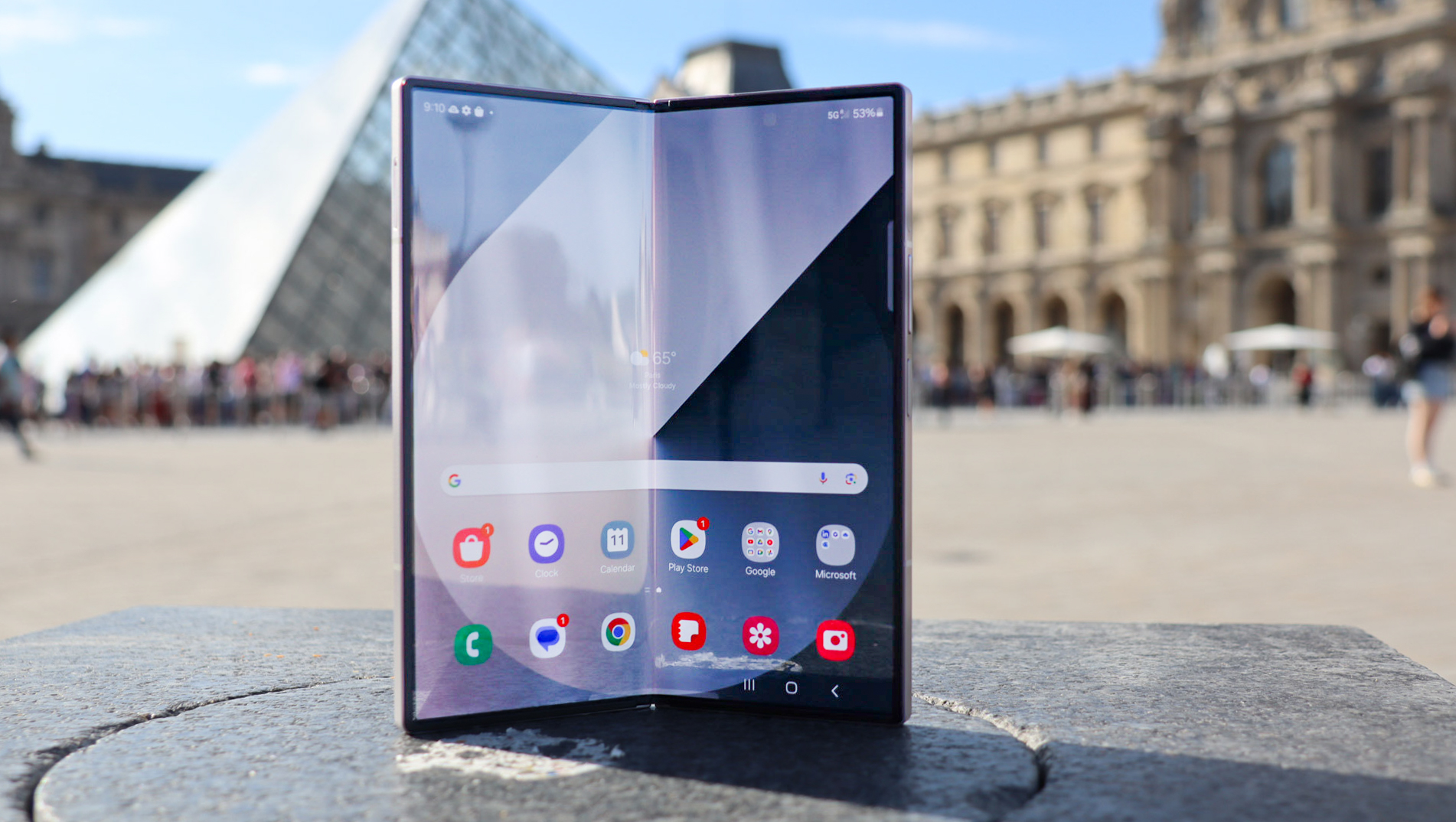
In stark contrast, the Z Fold 6 is designed for expansive utility. It’s a device that starts as a thick, albeit narrow, smartphone and unfolds into a mini-tablet. The defining characteristic is its ability to offer a massive screen real estate in a device that can still (just about) fit into a pocket. For the Z Fold 6, rumors suggest a potentially wider cover screen and a thinner, lighter overall design, addressing two of the most consistent criticisms of previous generations. A wider cover screen would significantly improve its usability in the closed state, making typing and general navigation less cramped.
The hinge mechanism will undoubtedly see improvements, aiming for even greater durability, a smoother folding action, and a virtually gap-less design when closed. While it will never be as pocketable as the Z Flip, the Z Fold 6’s goal is to be the most portable large-screen device possible, bridging the gap between smartphones and tablets with unprecedented efficiency. Its robust build, featuring similar high-end materials as the Flip, will underscore its premium positioning.
Verdict on Design: The Z Flip 7 wins for pure portability, fashion, and effortless pocketability. The Z Fold 6 wins for its transformative nature, offering a tablet experience that is uniquely accessible on the go, albeit with a larger footprint.
III. Displays: Canvas Size vs. Cover Screen Utility
The displays are arguably the most critical components of any foldable phone, defining much of its user experience.
Galaxy Z Flip 7: Balanced Immersion and Enhanced Cover Screen
The Z Flip 7’s main display is expected to be a high-quality Dynamic AMOLED 2X panel, likely around 6.7 to 6.9 inches when unfolded, offering a familiar smartphone experience. We anticipate a 120Hz adaptive refresh rate for buttery-smooth scrolling and content consumption. The focus will be on further minimizing the visible crease and enhancing the ultra-thin glass (UTG) for improved durability and a more seamless tactile feel.
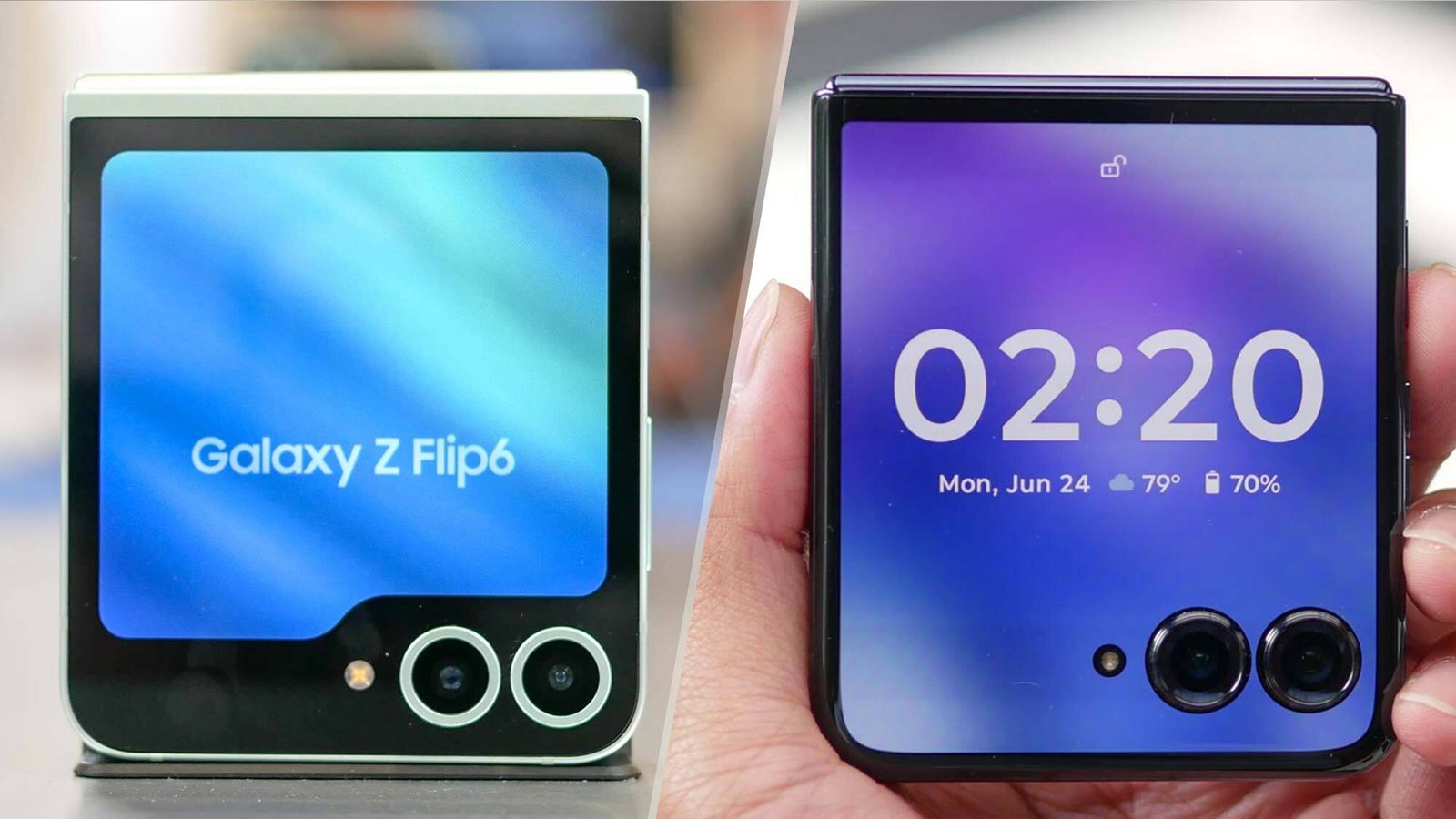
However, the real star of the Z Flip 7’s display evolution is likely its cover screen. Building on the larger, more functional screen introduced in the Z Flip 5, the Z Flip 7’s external display is rumored to grow even larger, potentially becoming a near full-sized, interactive screen capable of running a wider array of widgets, quick access apps, and even full-fledged applications without needing to open the phone. This would dramatically enhance its utility for quick glances, notifications, media controls, and superior selfie framing using the main cameras. The goal is to make the folded state even more productive, reducing the need to constantly unfold the device.
Galaxy Z Fold 6: Unrivaled Immersion and Multitasking Powerhouse
The Z Fold 6 will continue to boast Samsung’s largest foldable display, an expansive internal Dynamic AMOLED 2X panel expected to be around 7.6 to 7.8 inches. This tablet-sized screen is designed for immersive media consumption, intensive multitasking, and creative work. The 120Hz adaptive refresh rate and incredible brightness will make it a joy for everything from gaming to video editing. Improvements to the under-display camera (UDC) are expected, making it even less noticeable, thus providing a truly uninterrupted viewing experience. The crease, while still likely present to some degree, is expected to be further minimized and less distracting.
The cover display of the Z Fold 6 is also critical. If rumors of a wider aspect ratio are true, it would transform the closed-state experience. Previous Fold models often felt too narrow for comfortable typing and app usage on the cover screen. A wider display would make it much more akin to a conventional smartphone, allowing users to perform many tasks without needing to unfold the device, thus enhancing efficiency and battery life.
Verdict on Displays: For sheer size, immersion, and multitasking capability, the Z Fold 6’s internal display is unmatched. For enhancing the quick-glance, compact experience, the Z Flip 7’s evolved cover screen is its standout feature, making the folded state genuinely useful.
IV. Performance and Software: Powering Different Experiences
Both the Z Flip 7 and Z Fold 6 are expected to be powered by the latest flagship processor, likely a custom "for Galaxy" variant of the Qualcomm Snapdragon 8 Gen 4 or an equivalent next-generation Exynos chip in some markets. This ensures top-tier performance, capable of handling any task thrown at them, from demanding games to intensive productivity applications. Ample RAM (likely 8GB-12GB for the Flip, 12GB-16GB for the Fold) and fast UFS storage will also be standard.
Galaxy Z Flip 7: Optimized for Casual Use and Flex Mode
While packing flagship power, the Z Flip 7’s software experience will be tailored to its form factor. One UI will provide a clean, intuitive interface. Flex Mode, where the phone is partially folded, will continue to be a highlight, allowing for hands-free video calls, unique camera angles, and a split-screen interface for media consumption (e.g., video on top, controls on bottom). The expanded cover screen will be deeply integrated with One UI, offering enhanced widget functionality, quick replies, and even limited app access without unfolding. Its performance focus is on fluid daily operations, quick app launches, and efficient power management for its smaller battery.
Galaxy Z Fold 6: The Multitasking Maestro
The Z Fold 6’s software experience is where its true power lies. One UI on the Fold is heavily optimized for its large internal display, enabling unparalleled multitasking capabilities. Features like Multi-Active Window (allowing up to three apps to run simultaneously), the persistent Taskbar for quick app switching, and enhanced drag-and-drop functionality will make it a productivity beast. Flex Mode on the Fold is also more sophisticated, offering desktop-like interfaces for certain apps (e.g., YouTube with video on top, comments on bottom).
Furthermore, the Z Fold 6 is expected to heavily leverage Samsung DeX, allowing it to connect to an external monitor for a full desktop computing experience. Its integration with the S Pen (discussed below) further cements its position as a productivity powerhouse. The software is designed to transform the device from a phone to a tablet to a desktop, seamlessly adapting to the user’s needs.
Verdict on Performance & Software: Both will be incredibly powerful. The Z Flip 7 excels at providing a smooth, stylish smartphone experience with unique Flex Mode benefits. The Z Fold 6, however, takes full advantage of its larger display to offer a desktop-class multitasking and productivity experience, unmatched by any other smartphone.
V. Cameras: Capability vs. Versatility
Camera performance has become a major differentiator in the smartphone market, and foldables are no exception. While they might not always pack the absolute latest camera tech found in Samsung’s Ultra series, they aim for excellent, reliable performance.
Galaxy Z Flip 7: Elevated Casual Photography
The Z Flip 7 is expected to feature a capable dual-camera setup on the rear, likely a main wide-angle sensor and an ultrawide. While it might not reach the multi-lens prowess of the Z Fold 6 or S24 Ultra, it will be optimized for excellent everyday photos and videos. Improvements in low-light performance, dynamic range, and video stabilization are anticipated. The real camera innovation for the Z Flip 7 lies in its interaction with the form factor. FlexCam, which allows the phone to act as its own tripod, will be enhanced for hands-free selfies, group shots, and unique video perspectives. The larger cover screen will also serve as a superior viewfinder for capturing high-quality selfies using the main cameras. The front-facing camera, housed within the main display, will be adequate for video calls and quick selfies.
Galaxy Z Fold 6: A Comprehensive Flagship Camera System
The Z Fold 6 is expected to inherit a more comprehensive and versatile camera system, likely mirroring or closely approaching the capabilities of Samsung’s latest S-series flagships (e.g., similar to the S24+ or even S24 Ultra). This would include a high-resolution main sensor, an ultrawide lens, and at least one telephoto lens (potentially a periscope lens for extended optical zoom). This array offers greater flexibility for various shooting scenarios, from expansive landscapes to detailed distant subjects.
The Z Fold 6 also benefits from its unique form factor for photography. The large inner screen can serve as an expansive viewfinder, allowing for more precise framing. Director’s View, which utilizes multiple cameras simultaneously, is particularly effective on the Fold. The ability to use the cover screen as a preview for the subject adds another layer of versatility for portrait shots. The under-display camera (UDC) for video calls and the punch-hole camera on the cover display will also see incremental improvements.
Verdict on Cameras: The Z Fold 6 will offer a more versatile and generally higher-performing camera system, ideal for photography enthusiasts who need a lens for every situation. The Z Flip 7 will deliver excellent casual photography with unique advantages stemming from its foldable design, particularly for hands-free shots and high-quality selfies using the main cameras.
VI. Battery Life and Charging: Balancing Power and Portability
Battery life is a constant concern for smartphones, and foldables, with their complex designs and large screens, present unique challenges.
Galaxy Z Flip 7: Optimized for a Compact Design
The Z Flip 7 will likely house a battery similar in capacity to its predecessors, probably in the range of 3,700mAh to 4,000mAh. While not massive, its smaller internal display and the growing utility of its cover screen (reducing the need to unfold) should contribute to decent all-day battery life for typical users. Power efficiency gains from the new processor will also play a crucial role. Fast wired charging (likely 25W), wireless charging, and reverse wireless charging are expected to be standard, offering convenience for topping up throughout the day.
Galaxy Z Fold 6: Powering a Tablet Experience
The Z Fold 6 will require a larger battery to power its expansive internal display and support intensive multitasking. We can expect a battery capacity in the range of 4,400mAh to 4,800mAh. Despite the larger battery, the power demands of the main screen mean that heavy users might still find themselves reaching for a charger by late afternoon. However, the efficiency of the new chipset and potential display advancements (like more aggressive LTPO refresh rate scaling) should lead to improvements over previous generations. Faster wired charging (potentially 45W), wireless charging, and reverse wireless charging will also be present.
Verdict on Battery: Neither device is likely to be an absolute battery champion compared to some non-foldable slab phones. The Z Fold 6 will have a larger battery to compensate for its larger screen, making it suitable for longer periods of heavy use. The Z Flip 7’s battery, while smaller, should be sufficient for its intended use case, especially with enhanced cover screen utility.
VII. S Pen Integration: The Fold’s Unique Advantage
This is perhaps the clearest differentiator that directly impacts productivity.
Galaxy Z Flip 7: No S Pen Support
The Z Flip 7, due to its design constraints and target audience, is not expected to support S Pen functionality. Its focus is on quick, intuitive touch interaction.
Galaxy Z Fold 6: The Ultimate Creative and Productivity Tool
The Z Fold 6 will undoubtedly continue its strong integration with the S Pen. Whether it’s bundled or sold separately, the S Pen transforms the large internal display into a digital notepad, sketchbook, or precision input device. Features like S Pen to text, Air Actions, screen-off memos, and detailed drawing capabilities make it indispensable for students, artists, and professionals. Rumors suggest Samsung might finally integrate a dedicated S Pen slot into the Z Fold 6 itself, eliminating the need for bulky cases and making the S Pen truly an always-on-hand accessory. This would be a significant quality-of-life improvement for Fold users.
Verdict on S Pen: If pen input for note-taking, drawing, or precise interaction is important to you, the Z Fold 6 is the only choice. This feature alone can be a deal-breaker for those who value digital ink.
VIII. Price and Value Proposition: Premium Tiers
Foldable phones remain premium devices, representing the cutting edge of mobile technology.
Galaxy Z Flip 7: The More Accessible Premium Foldable
The Z Flip 7 is expected to retain its position as the more "affordable" entry into the foldable market. While still a premium price, it will be significantly less expensive than the Z Fold 6. Its value proposition lies in offering a unique, compact, and stylish form factor that stands out from conventional smartphones, without breaking the bank quite as much as its larger sibling. It appeals to those who want the foldable experience primarily for its aesthetic and portability advantages.
Galaxy Z Fold 6: The Ultimate Productivity Investment
The Z Fold 6 will undoubtedly command a top-tier price, making it one of the most expensive consumer smartphones on the market. Its value proposition is centered around its ability to replace multiple devices – a premium smartphone and a tablet – into one cohesive package. For professionals who can leverage its multitasking capabilities, S Pen, and DeX functionality, the Z Fold 6 can be seen as an investment that enhances productivity and streamlines their workflow, potentially justifying its high cost.
Verdict on Price: The Z Flip 7 offers a more palatable entry point into the foldable world for a wider audience. The Z Fold 6 is a significant investment, justified only if you fully utilize its extensive productivity features and desire a tablet-like experience in your pocket.
IX. Durability and Longevity: The Elephant in the Room
Early foldable phones faced skepticism regarding their durability. Samsung has made significant strides, and the Z Flip 7 and Z Fold 6 are expected to further solidify their resilience.
Shared Improvements:
- Hinge Refinements: Expect more robust, dust-resistant, and fluid hinges. The "waterdrop" hinge design (if fully implemented across both) reduces the crease and stress on the display.
- Ultra-Thin Glass (UTG): Continued advancements in UTG technology will make the main displays more scratch-resistant and durable against repeated folding.
- IPX8 Water Resistance: Both devices are expected to maintain their IPX8 rating, offering protection against submersion in fresh water, a significant achievement for foldables.
- Armor Aluminum Frame & Gorilla Glass Armor/Victus: These materials enhance drop resistance and scratch resistance for the external panels and frame.
Specific Considerations:
- Crease: While minimized, the crease will likely remain visible to some degree on both devices. Its long-term impact on usability and aesthetics is a common concern.
- Dust/Debris: Despite hinge improvements, the intricate nature of foldables means they are inherently more susceptible to dust ingress than traditional slab phones.
- Screen Protector: The factory-installed screen protector on the main display is crucial for durability and should not be removed. Future generations might see even more resilient materials.
Verdict on Durability: Samsung has proven foldables can be durable for everyday use. While not as robust as a solid slab phone, the Z Flip 7 and Z Fold 6 will offer strong resistance to water and typical wear and tear, making them reliable daily drivers. Long-term crease visibility and potential dust sensitivity remain minor concerns but have significantly improved.
X. The Verdict: Who is it For?
Choosing between the Galaxy Z Flip 7 and Z Fold 6 boils down to a fundamental question: Do you prioritize ultimate portability and style, or unparalleled productivity and a tablet-like experience?
Choose the Samsung Galaxy Z Flip 7 if:
- Portability is paramount: You want a full-sized smartphone that literally folds in half to fit anywhere.
- Style and uniqueness appeal to you: You see your phone as a fashion accessory and enjoy its nostalgic clamshell action.
- You’re a casual user: Your primary smartphone activities include social media, messaging, browsing, and media consumption, with occasional hands-free use.
- You love taking unique selfies and group photos: The FlexCam and large cover screen for main camera selfies are major draws.
- You want a premium foldable experience without the absolute top-tier price tag.
- You value a compact form factor that also protects the inner screen when closed.
Choose the Samsung Galaxy Z Fold 6 if:
- Productivity and multitasking are your top priorities: You frequently use multiple apps simultaneously, manage documents, or work on the go.
- You desire a tablet-sized display in a pocketable form factor: You want immersive media consumption, gaming, and a vast canvas for creative work.
- S Pen functionality is essential for your workflow: Note-taking, drawing, and precise interaction are crucial to you.
- You want to replace both your smartphone and your tablet with one device.
- You can justify the premium price for a device that significantly enhances your digital productivity.
- You appreciate having a comprehensive flagship camera system with versatile zoom options.
XI. Conclusion: A Foldable Future for Everyone
The Samsung Galaxy Z Flip 7 and Galaxy Z Fold 6 represent the continued evolution of foldable technology, each catering to distinct user needs with increasing refinement and capability. They are not merely iterative updates but rather carefully crafted instruments designed to enhance specific aspects of our digital lives.
The Z Flip 7 stands as a testament to elegant design and ultimate portability, proving that a cutting-edge smartphone can also be a fashion statement and a joy to carry. The Z Fold 6, on the other hand, pushes the boundaries of mobile productivity, offering an unparalleled canvas for work and play that redefines the very concept of a smartphone.
Ultimately, Samsung’s dual-track approach ensures that the foldable future is not a one-size-fits-all proposition. As these devices continue to mature, the choice becomes less about compromise and more about finding the perfect foldable companion that seamlessly integrates into your unique lifestyle, whether that’s in a compact, stylish package or an expansive, productivity-driven powerhouse. The future of smartphones is indeed foldable, and Samsung continues to lead the way with compelling options for every user.