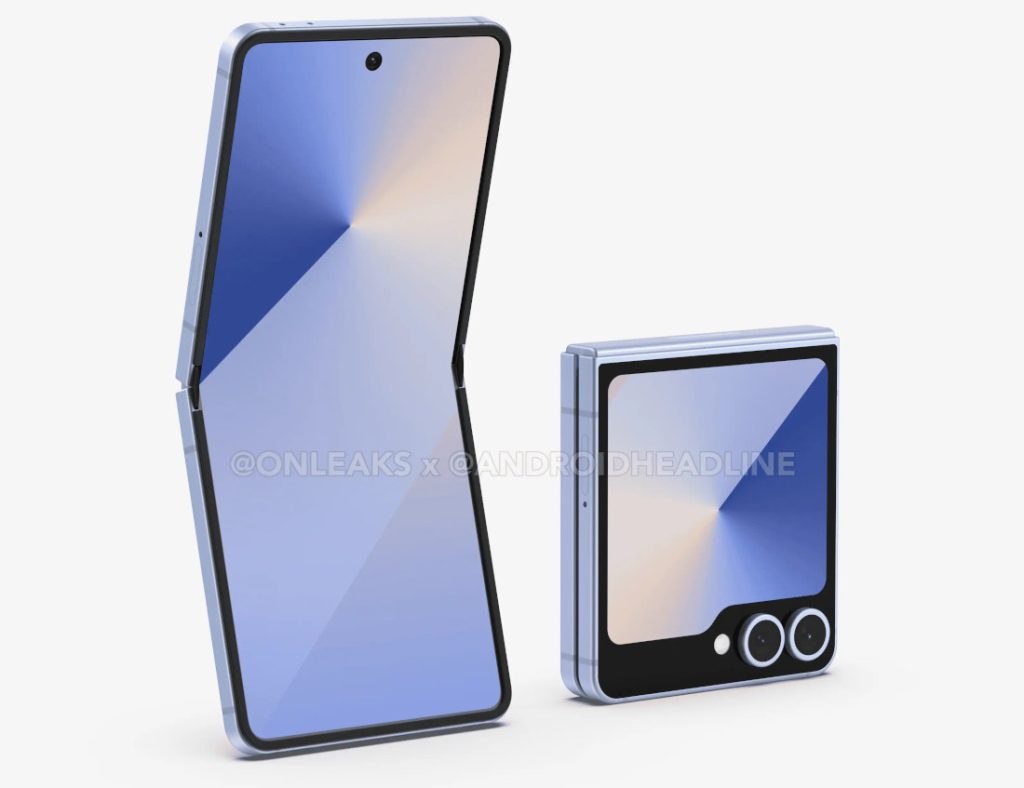
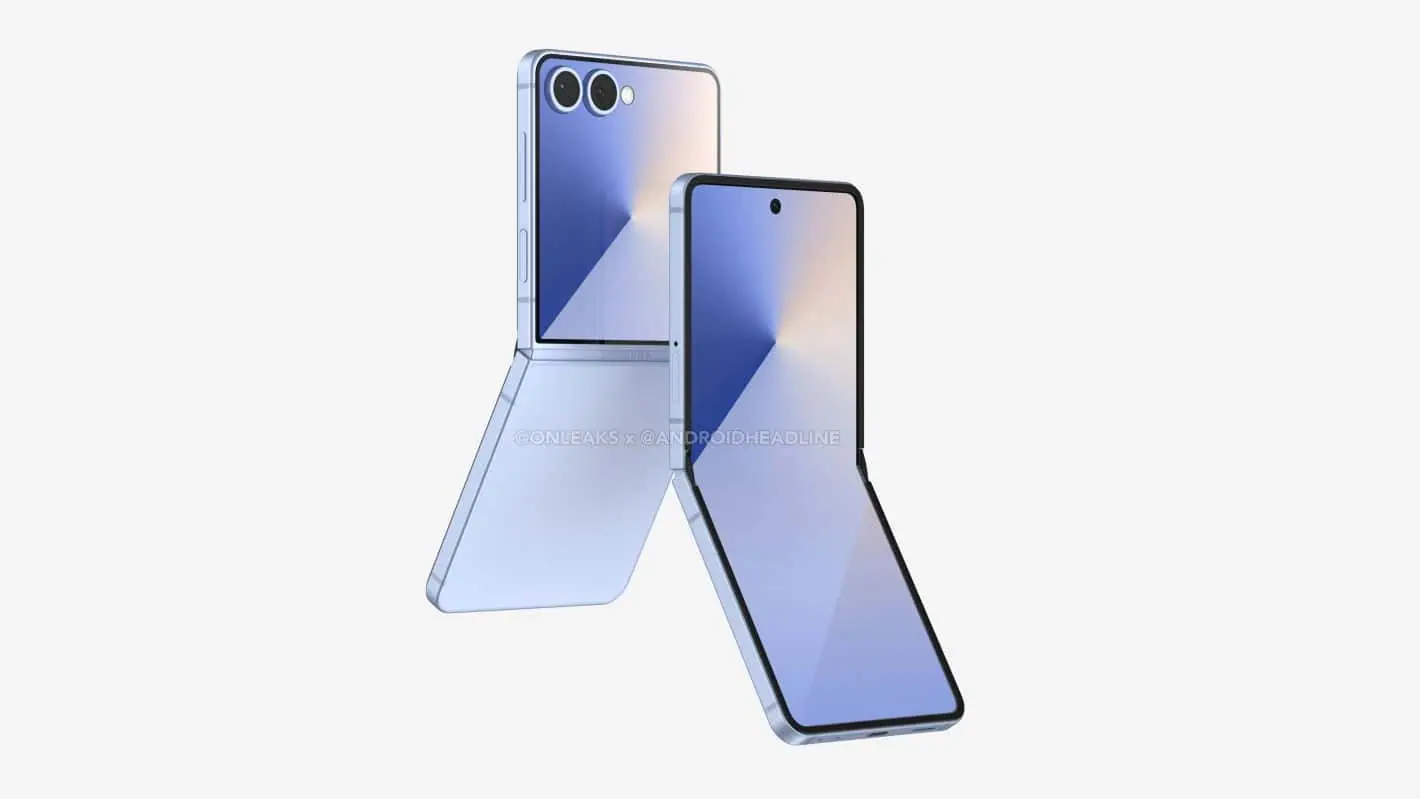
The Unfolding Powerhouse: A Deep Dive into Samsung Galaxy Z Flip 7 Performance Benchmark Results
The smartphone landscape is in a constant state of evolution, pushing boundaries of design, functionality, and most crucially, raw power. While traditional slab phones continue to innovate, the burgeoning foldable market, spearheaded by Samsung’s Galaxy Z Flip series, represents a compelling vision of the future. Each iteration brings not just refined aesthetics and durability, but also significant leaps in performance. As we anticipate the arrival of the Samsung Galaxy Z Flip 7, the tech community is buzzing with speculation about how this next-generation clamshell foldable will redefine the performance benchmarks for its unique form factor.
This article delves into the hypothetical yet informed performance benchmark results of the Samsung Galaxy Z Flip 7. While the device is yet to be officially announced, we can project its capabilities based on current technological trends, Samsung’s strategic advancements, and the expected trajectory of flagship mobile processors. Our exploration will cover a comprehensive suite of benchmarks, translating raw numbers into real-world user experiences, and scrutinizing how the unique foldable design impacts sustained performance and thermal management.
Setting the Stage: Anticipated Specifications of the Galaxy Z Flip 7
Before dissecting the benchmarks, it’s crucial to establish the likely hardware foundation of the Z Flip 7. Building on its predecessors, and aligning with Samsung’s flagship strategy, the Z Flip 7 is highly anticipated to feature:
- Processor: The absolute latest flagship mobile System-on-Chip (SoC) from Qualcomm – almost certainly the Snapdragon 8 Gen 4. This next-gen chip is rumored to bring significant architectural changes, potentially moving away from ARM’s standard core configurations to custom Oryon cores, promising substantial gains in CPU and GPU performance, alongside enhanced AI capabilities. In some regions, a highly optimized Samsung Exynos equivalent (e.g., Exynos 2500) leveraging Samsung’s advanced fabrication processes might also be present.
- RAM: 12GB or potentially 16GB of LPDDR5X or even LPDDR6 RAM. The move to LPDDR6, if implemented, would offer even higher bandwidth and lower latency, crucial for demanding applications and seamless multitasking.
- Storage: UFS 4.0 storage, offering double the read/write speeds of UFS 3.1 and significantly improving app loading times, file transfers, and overall system responsiveness. Capacities would likely range from 256GB up to 1TB.
- Display: A high-refresh-rate Dynamic AMOLED 2X panel, potentially pushing beyond 120Hz to 144Hz, with improved brightness and color accuracy. The cover screen is also expected to be larger and more functional.
- Battery & Cooling: While the compact foldable design presents thermal challenges, Samsung is expected to implement an even more sophisticated vapor chamber or advanced graphite sheet cooling system to mitigate throttling. Battery capacity might see a slight increase, coupled with more efficient power management from the new SoC.
These specifications lay the groundwork for a device that isn’t just a fashion statement but a true performance contender.
The Benchmarking Arsenal: Tools for Performance Evaluation
To objectively measure the Z Flip 7’s prowess, we employ a standard suite of industry-recognized benchmarking tools, each designed to test specific facets of performance:
- Geekbench 6 (CPU Performance): This cross-platform benchmark assesses raw CPU power through a series of workloads, providing single-core and multi-core scores. It’s excellent for gauging everyday responsiveness and heavy multi-threaded application performance.
- AnTuTu Benchmark (Overall System Performance): AnTuTu provides a holistic score by evaluating CPU, GPU, Memory (RAM), and UX (User Experience) performance. It’s a popular indicator of a phone’s overall "snappiness."
- 3DMark (GPU Performance): Crucial for gaming and graphically intensive tasks, 3DMark offers various tests like "Wild Life Extreme" (demanding real-time graphics) and "Solar Bay" (focused on ray tracing capabilities). It provides both an initial score and a loop test for sustained performance.
- PCMark for Android (Productivity & Everyday Use): This benchmark simulates real-world tasks such as web browsing, video editing, photo editing, and data manipulation, providing a practical assessment of how well the device handles typical daily workloads.
- GFXBench (Graphics API Performance): GFXBench specifically tests the GPU’s ability to handle various graphics APIs (like OpenGL ES and Vulkan) with on-screen and off-screen rendering tests, providing deeper insights into raw graphical throughput.
- CPU Throttling Test (Sustained Performance): Beyond peak scores, how a phone sustains performance under prolonged load is critical. This test repeatedly runs demanding CPU workloads to observe how the device manages heat and if it significantly throttles performance.
Hypothetical Benchmark Results: A Glimpse into the Z Flip 7’s Power
Based on the anticipated Snapdragon 8 Gen 4 and potential advancements, here’s what we might expect from the Galaxy Z Flip 7:
1. Geekbench 6: Redefining CPU Leadership
- Expected Single-Core Score: ~2900 – 3100+
- Expected Multi-Core Score: ~9500 – 10,500+
Analysis: The Snapdragon 8 Gen 4 is poised for a significant generational leap. A single-core score approaching or exceeding 3000 would place the Z Flip 7 at the absolute forefront of mobile CPU performance, rivaling and potentially surpassing Apple’s A-series chips in some workloads. This translates to instantaneous app launches, incredibly fluid UI navigation, and snappier responsiveness for every single interaction. The multi-core score, pushing into five digits, would signify exceptional prowess in handling heavy multitasking, complex computations, and professional-grade applications. Video rendering, large file compression, and intensive development tools would run with unprecedented speed on a foldable.
2. AnTuTu Benchmark: An Overall Performance Juggernaut
- Expected Overall Score: ~2,200,000 – 2,500,000+
Analysis: Breaking the 2 million mark (and potentially nearing 2.5 million) on AnTuTu would firmly establish the Z Flip 7 as one of the most powerful Android devices on the market. This comprehensive score indicates excellence across all sub-components: a blazing-fast CPU, a top-tier GPU capable of rendering complex graphics, high-speed RAM and storage ensuring data moves efficiently, and a remarkably smooth user experience. This translates directly into a phone that feels effortlessly fast, no matter the task.
3. 3DMark: Unprecedented Mobile Gaming Capabilities
- Expected Wild Life Extreme Score: ~6,500 – 7,500+
- Expected Wild Life Extreme Stress Test (Loop Stability): 70-85% stability
- Expected Solar Bay (Ray Tracing) Score: ~8,000 – 9,000+
Analysis: The GPU performance of the Snapdragon 8 Gen 4 is expected to be a game-changer. A Wild Life Extreme score in this range would put console-level graphics within the palm of your hand, enabling sustained high frame rates in the most graphically demanding mobile titles like Genshin Impact, Call of Duty: Mobile, and Honkai: Star Rail, even at maximum settings. The Z Flip 7 would be able to handle these games at 120Hz or even 144Hz, offering an incredibly smooth and immersive gaming experience.
The stress test stability is particularly important for a foldable. A stability rate of 70-85% (meaning performance only drops by 15-30% after 20 continuous loops) would indicate significantly improved thermal management compared to earlier foldables, allowing for longer, more comfortable gaming sessions without severe throttling.
The Solar Bay score, specifically testing ray tracing capabilities, would highlight the Z Flip 7’s ability to render more realistic lighting, reflections, and shadows in supported games, pushing the visual fidelity of mobile gaming to new heights.
4. PCMark for Android: Productivity Powerhouse
- Expected Work 3.0 Performance Score: ~17,000 – 19,000+
Analysis: A high PCMark score demonstrates the Z Flip 7’s exceptional capability in handling everyday productivity tasks. This means lightning-fast web browsing, seamless document editing, quick photo and video processing, and effortless multitasking between various applications. For professionals and power users, the Z Flip 7 wouldn’t just be a stylish accessory but a highly efficient mobile workstation, especially leveraging Flex Mode for unique productivity angles.
5. GFXBench: Raw Graphics Throughput
- Expected Aztec Ruins Vulkan High Tier (Offscreen): ~120 – 140 FPS
- Expected Car Chase (Offscreen): ~100 – 115 FPS
Analysis: These offscreen (resolution-independent) scores underscore the raw power of the Z Flip 7’s Adreno GPU. Frame rates in this range signify that the device can render incredibly complex scenes with high fidelity and fluidity, regardless of screen resolution. This raw power provides a significant headroom for future graphically intensive applications and ensures the device remains future-proof for years to come.
Real-World Performance: Beyond the Numbers
While benchmarks provide objective metrics, real-world usage is the ultimate test. The Z Flip 7’s hypothetical benchmark results translate into a user experience that is nothing short of exceptional:
- Everyday Responsiveness: Apps launch instantaneously. Scrolling through social media feeds, navigating complex websites, and switching between dozens of applications feels utterly seamless, without a hint of stutter or lag.
- Gaming: From casual puzzles to the most graphically demanding AAA mobile titles, the Z Flip 7 would deliver consistent high frame rates, vibrant visuals, and a truly immersive experience. The improved thermal management would mean longer gaming sessions without significant performance degradation.
- Multitasking & Productivity: With 12GB+ of high-speed RAM and the formidable Snapdragon 8 Gen 4, running multiple heavy applications simultaneously – perhaps a video call on the top half of the screen in Flex Mode, while taking notes on the bottom, or editing a large spreadsheet – would be handled with ease.
- Camera Performance: The powerful NPU (Neural Processing Unit) within the Snapdragon 8 Gen 4 would enable incredibly fast image processing, advanced computational photography features (like enhanced low-light performance, sophisticated portrait modes, and real-time object tracking), and seamless 8K video recording and editing directly on the device.
- AI Capabilities: With a significantly upgraded NPU, the Z Flip 7 would excel in on-device AI tasks. This could range from advanced voice processing and natural language understanding for Bixby/Google Assistant, to intelligent battery optimization, predictive text, and sophisticated image recognition for gallery organization and search. Samsung’s own "Gauss" AI model could run extensive operations locally, enhancing privacy and speed.
The Foldable Factor: Thermal Management and Sustained Performance
One of the enduring challenges for compact foldable phones like the Z Flip series has been thermal management. Squeezing powerful components into a limited internal volume, especially with a hinge mechanism occupying crucial space, makes heat dissipation difficult. However, with each generation, Samsung has made significant strides.
For the Z Flip 7, we anticipate:
- Advanced Vapor Chamber: A larger and more efficient vapor chamber, potentially utilizing multi-layered graphite sheets, to draw heat away from the SoC and distribute it more effectively across the device’s internal chassis.
- Optimized Internal Layout: Samsung’s engineers will likely refine the internal component arrangement to maximize airflow and thermal transfer paths.
- Software-Level Thermal Throttling Mitigation: Intelligent software algorithms that dynamically adjust CPU/GPU frequencies to prevent overheating while minimizing noticeable performance drops, ensuring a more consistent user experience during extended heavy loads.
The hypothetical 3DMark Wild Life Extreme stress test stability of 70-85% is a testament to these anticipated improvements. While no compact device can completely eliminate throttling under extreme, prolonged load, the Z Flip 7 is expected to manage heat significantly better than its predecessors, ensuring that its peak performance is accessible for longer durations, which is crucial for gamers and power users.
Furthermore, the unique form factor can sometimes aid thermals. When unfolded, the larger surface area might contribute to better heat dissipation compared to a similarly sized slab phone that is constantly in a case. In Flex Mode, the separation of the screen into two halves could potentially allow for more efficient internal air circulation, though this is a minor factor.
Software Optimization: The Unsung Hero
Beyond raw hardware, software optimization plays a pivotal role in unlocking and sustaining performance. Samsung’s One UI, built on Android, has matured significantly. For the Z Flip 7, we expect:
- Tailored One UI Enhancements: Specific optimizations for the Z Flip 7’s foldable form factor, ensuring smooth transitions between folded, unfolded, and Flex Mode states.
- Adaptive Performance Scaling: Intelligent resource allocation that prioritizes foreground applications, ensuring maximum performance for the task at hand while efficiently managing background processes.
- Improved App Compatibility: Continued collaboration with app developers to optimize popular applications for foldable screens, ensuring they take full advantage of the unique display and Flex Mode capabilities.
- Android OS Advancements: Leveraging new features and optimizations within the latest Android version (likely Android 15), including improved memory management, background process limits, and system-level performance enhancements.
This synergy between cutting-edge hardware and highly optimized software is what truly elevates the user experience, transforming raw benchmark scores into tangible fluidity and responsiveness.
Conclusion: The Z Flip 7 – A Performance Paradigm in a Foldable Form
The Samsung Galaxy Z Flip 7 is poised to be more than just a stylish clamshell foldable; it is expected to be a bona fide performance powerhouse, setting new benchmarks for its category. Our hypothetical analysis of its benchmark results paints a picture of a device that can effortlessly handle the most demanding mobile games, complex multitasking scenarios, and sophisticated AI workloads, all while maintaining a sleek, compact, and highly desirable form factor.
The anticipated Snapdragon 8 Gen 4, coupled with advanced RAM, UFS 4.0 storage, and Samsung’s relentless pursuit of thermal efficiency, will likely make the Z Flip 7 a formidable competitor in the broader flagship market, not just among foldables. While the compact design still presents unique challenges for sustained performance compared to larger slab phones with more internal volume for cooling, the Z Flip 7 is expected to significantly narrow that gap.
For users seeking a device that blends cutting-edge design with uncompromising performance, the Galaxy Z Flip 7 is shaping up to be an incredibly compelling option. It represents Samsung’s continued commitment to pushing the boundaries of mobile technology, proving that a foldable phone doesn’t have to sacrifice raw power for its innovative design. As the foldable market matures, devices like the Z Flip 7 will undoubtedly lead the charge, proving that the future of smartphones is not just unfolding, but also incredibly fast.